
Emergency Fund USA 2026 – Complete Guide for Financial Stability
Life in the United States has become financially unpredictable. Even people with stable jobs face sudden layoffs, medical expenses, rising rent, and unexpected emergencies. In this environment, building an emergency fund in the USA 2026 is not a luxury—it is a necessity.
An emergency fund acts as your financial safety net. It protects you from falling into debt when life takes an unexpected turn. Without it, even a small emergency can create long-term financial damage. With it, you gain peace of mind, control, and confidence.
 This Emergency Fund USA 2026 complete guide is written for real people. Whether you are a low-income earner, a working professional, a family provider, or someone living paycheck to paycheck, this guide explains everything clearly and practically.
What Is an Emergency Fund in the USA?
An emergency fund is money you set aside specifically for unexpected and urgent expenses. These are not planned costs like vacations or shopping. Emergency funds are strictly for situations that disrupt your normal income or daily life.
Examples include sudden job loss, medical emergencies, urgent car repairs, home maintenance issues, or family emergencies. In the USA, where healthcare and living costs are high, an emergency fund prevents financial panic.
The goal of an emergency fund in the USA is simple: avoid debt and protect your financial future.
Why an Emergency Fund Is More Important in the USA in 2026
In 2026, many Americans work in contract roles, gig jobs, or unstable industries. Healthcare costs continue to rise, and even insured individuals face high deductibles. Inflation has increased the cost of basic necessities like food, rent, and utilities.
Without an emergency fund, people often rely on credit cards, personal loans, or payday loans. These options solve short-term problems but create long-term financial stress.
An emergency fund USA 2026 provides flexibility. It allows you to handle emergencies calmly instead of reacting out of fear. It protects your credit score and keeps you financially independent.
The Consumer Financial Protection Bureau emphasizes the importance of emergency savings for financial stability.
How Much Emergency Fund Do I Need in the USA in 2026?
This is one of the most searched questions related to emergency fund USA 2026. The answer depends on your lifestyle, income stability, and family responsibilities.
General Emergency Fund Rule (USA)
Most financial experts recommend:
- 3 months of essential expenses – minimum
- 6 months of essential expenses – ideal
- 9 to 12 months – for unstable income or single-income households
Essential expenses include rent or mortgage, utilities, groceries, transportation, insurance, and minimum debt payments.
Emergency Fund for Low Income Earners in USA
For low-income earners, saving several months of expenses may feel overwhelming. That’s completely normal.
Start small:
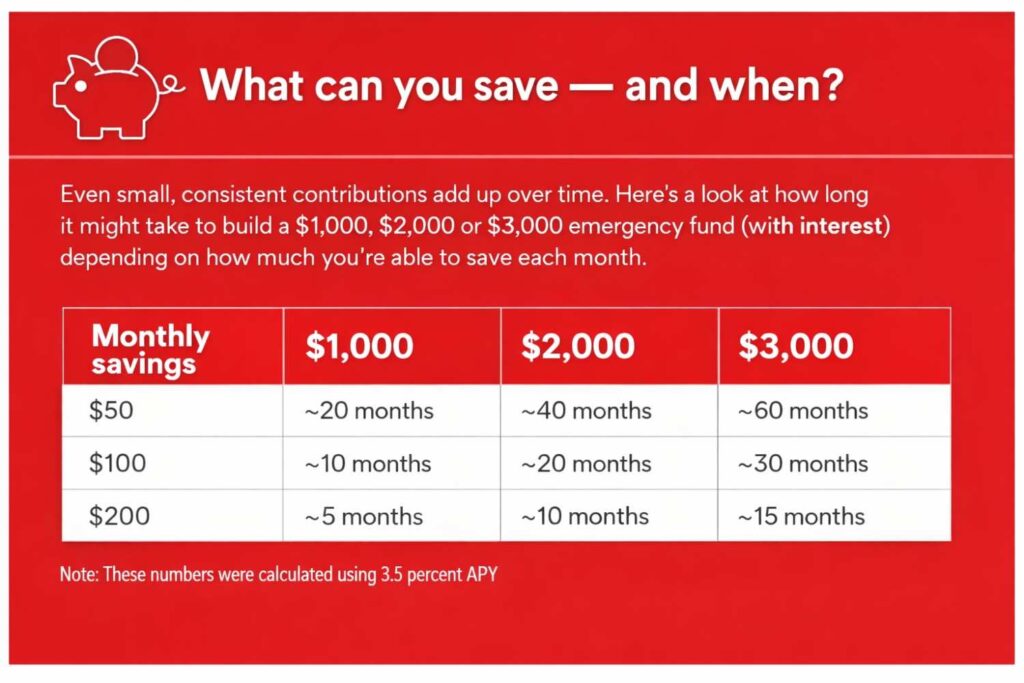
- First goal: $500
- Second goal: $1,000
Then gradually build one month of expenses
In 2026, building an emergency fund in the USA is about consistency, not perfection.
Emergency Fund for Families vs Singles
Singles generally need a smaller emergency fund because their expenses are lower. Families need more protection because dependents increase financial responsibility.
- Singles: 3–6 months
- Families: at least 6 months
- Self-employed or gig workers: 6–12 months
Where to Keep Emergency Fund USA (Critical Decision)
Knowing where to keep your emergency fund in the USA is as important as building it.
Best Place: High-Yield Savings Account
The safest and smartest place to keep an emergency fund USA 2026 is a high-yield savings account.
These accounts offer:
- FDIC insurance up to $250,000
- Easy access to funds
- Higher interest than regular savings
- Zero market risk
A high-yield savings account ensures your emergency fund remains safe, liquid, and protected.
Read more..
Best High-Yield Savings Accounts in USA: Highest APY Rates, Top Banks & Features
 Places You Should Avoid for Emergency Fund
 Places You Should Avoid for Emergency Fund
- Stock market
- Cryptocurrency
- Long-term fixed deposits with penalties
- Cash stored at home
Emergency funds must be accessible immediately. Risky investments defeat their purpose.
Emergency Fund vs Savings Account: Understanding the Difference
Many people confuse emergency funds with general savings. While both are important, they serve different purposes.
A savings account may be used for planned goals like travel or purchases. An emergency fund is strictly for unexpected situations.
Separating your emergency fund from regular savings helps maintain discipline and prevents misuse.
How to Build Emergency Fund Fast USA (2026 Strategy)
Building an emergency fund USA does not require a high income. It requires smart habits.
Step 1: Automate Your Savings
Set up automatic transfers from your checking account to your emergency fund account. Even $25 or $50 per paycheck adds up over time.
Automation removes emotional resistance and builds consistency.
Step 2: Reduce Temporary Expenses
Cut back on non-essential spending temporarily. Cancel unused subscriptions, cook at home, and delay discretionary purchases.
These changes don’t need to be permanent, but they accelerate progress.
Step 3: Use Windfalls Wisely
Tax refunds, bonuses, or cash gifts are opportunities. In 2026, using at least half of any windfall toward your emergency fund strengthens your financial foundation.
Step 4: Increase Income Slightly
Even a small income boost makes a big difference. Freelance work, overtime, or selling unused items can add $100–$300 per month.
This extra income can be directed entirely toward your emergency fund.
Emergency Fund Mistakes to Avoid in the USA
Many people fail to build a proper emergency fund because of common mistakes.
Avoid these:
- Investing emergency money in risky assets
- Using the fund for non-emergencies
- Keeping emergency funds in checking accounts
- Failing to rebuild after using the fund
- Waiting until income increases
Avoiding these mistakes is as important as saving itself.
Real-Life Example: Emergency Fund USA 2026
Consider a person earning $3,200 per month with essential expenses of $2,400.
- 3-month emergency fund: $7,200
- 6-month emergency fund: $14,400
By saving $300 per month, this person can build a 3-month emergency fund in two years. This is realistic and achievable.
Emergency Fund for Job Loss in the USA
Job loss is one of the most common emergencies in the USA. Severance pay and unemployment benefits may help, but they are often delayed.
An emergency fund provides immediate support. It allows you to search for a job without panic or desperation.
Emergency Fund and Mental Peace
Beyond financial protection, an emergency fund improves mental health. Knowing you can handle unexpected expenses reduces anxiety and improves decision-making.
In 2026, financial stress is one of the leading causes of anxiety. An emergency fund offers emotional stability.
Emergency Fund vs Paying Off Debt: What Comes First?
This is a common dilemma. Most experts recommend building a small emergency fund first before aggressively paying off debt.
A starter emergency fund prevents you from going deeper into debt when unexpected expenses arise.
Emergency Fund for Immigrants in the USA
Immigrants face additional financial challenges, including limited credit history and family obligations abroad. An emergency fund provides stability during transitions.
Even small emergency savings can make a significant difference.
How Often Should You Update Your Emergency Fund in 2026?
Review your emergency fund at least once a year. Increase it when:
Your expenses rise
- You start a family
- You change jobs
- Your income becomes unstable
An emergency fund is not static—it grows with your life.
Q&A – Emergency Fund USA 2026
What is an emergency fund in the USA?
An emergency fund in the USA is money set aside to handle unexpected expenses like job loss, medical bills, or urgent repairs. It helps avoid debt and provides financial stability during emergencies.
How much emergency fund do I need USA in 2026?
In 2026, most financial experts recommend saving 3 to 6 months of essential expenses. People with unstable income, families, or self-employment may need 6 to 12 months for better security.
Where to keep emergency fund USA?
The best place to keep an emergency fund in the USA is a high-yield savings account that is FDIC insured. It keeps your money safe, liquid, and earning interest while remaining easily accessible.
Is a high-yield savings account good for an emergency fund?
Yes. A high-yield savings account is ideal for an emergency fund because it offers higher interest than regular savings accounts while maintaining safety and quick access to funds.
Can I invest my emergency fund in stocks or crypto?
No. An emergency fund should not be invested in stocks, crypto, or mutual funds because these carry market risk. Emergency funds must remain stable and immediately available.
How to build emergency fund fast USA?
You can build an emergency fund faster by automating savings, cutting unnecessary expenses, saving tax refunds or bonuses, and increasing income through side work or overtime.
Is an emergency fund necessary if I have a credit card?
Yes. Credit cards create debt and interest, while an emergency fund uses your own money. An emergency fund protects your credit score and prevents long-term financial stress.
What is the difference between an emergency fund and a savings account?
A savings account can be used for planned goals, while an emergency fund is strictly for unexpected situations. Keeping them separate helps maintain financial discipline.
How much emergency fund is enough for low income earners in the USA?
Low income earners should start with $500 to $1,000 and gradually build toward one month of expenses. Consistency matters more than the amount when starting.
Should I build an emergency fund or pay off debt first?
Experts recommend building a small emergency fund first, then focusing on debt repayment. This prevents new debt when unexpected expenses arise.
What is the 70/20/10 rule in personal finance?
The 70/20/10 rule is a simple budgeting method where 70% of your income is used for essential expenses like rent, food, and bills, 20% is allocated to savings or debt repayment, and 10% is reserved for personal spending or lifestyle needs. This rule is especially useful for people in the USA who are managing money on a tight budget or building an emergency fund, because it offers flexibility while still encouraging consistent saving.
What is the 3 6 9 rule for emergency fund?
Those general saving targets are often called the “3-6-9 rule”: savings of 3, 6, or 9 months of take-home pay. Here are some guidelines to help you decide what total savings fits your needs.
How many Americans have a 3-6 month emergency fund?
Nearly a quarter of Americans have no emergency savings While experts typically recommend keeping three to six months of expenses saved for emergencies, in reality, many people don’t have nearly that much saved. Only 46 percent of Americans have enough emergency savings to cover three months of expenses.
Final Thoughts: Emergency Fund USA 2026
Building an emergency fund in the USA in 2026 is one of the smartest financial decisions you can make. It protects you from debt, reduces stress, and gives you control over your future.
You don’t need to be perfect. You just need to start. Even small steps lead to long-term security.
Leave a Reply